Before the story begins
The Hurricane Sinks the Cargo Ship
A violent hurricane rages across the ocean, and in the midst of the chaos, a cargo ship carrying hundreds of brand-new robots sinks to the bottom of the sea. The ship leaves behind hundreds of crates floating on the surface, but the storm batters them, and one by one they sink into the depths. Only five crates remain afloat, drifting lazily along an ocean current.
Days after the shipwreck
The Crates Reach the Island
After days of drifting, the five remaining crates approach a wild, rocky island. The first four crates crash against the rocks and shatter, destroying the robots inside. The fifth crate, however, slams against the wreckage of the others, is lifted by a wave, and crashes onto a high rocky plateau. The crate is cracked and crumpled, but the robot inside is safe.
The morning after the crates land
The Otters Discover the Robot
A band of sea otters, curious about the sparkling objects on the shore, investigates the robot graveyard. They play with the scattered robot parts, and then they discover the one surviving crate. Peeking inside, they see a brand-new robot surrounded by packing foam. As they tear at the foam, one of the otters accidentally presses a small button on the back of the robot's head, activating it.
Immediately after being activated
Roz Activates
The robot's computer brain starts up, and its programs come online. Still packed in its crate, it automatically begins to speak, introducing itself as ROZZUM unit 7134, or '[Roz](entity:character-recall-character-roz-8ef263f5d049)'. It explains that once fully activated, it can move, communicate, and learn. It states that it will find better ways to perform its tasks and will stay out of the way when not needed, maintaining itself in good working order.
Shortly after activation
Roz Emerges from Her Crate
Feeling a sort of curiosity, [Roz](entity:character-recall-character-roz-8ef263f5d049) identifies the warm ball of light as the sun and absorbs its energy. Once her battery is full, she breaks the cords holding her arms, dismantles her crate, and rises into the world like a newborn from a shell. The otters, frightened by the sparkling monster, flee.
Shortly after emerging from her crate
Roz Explores the Robot Graveyard
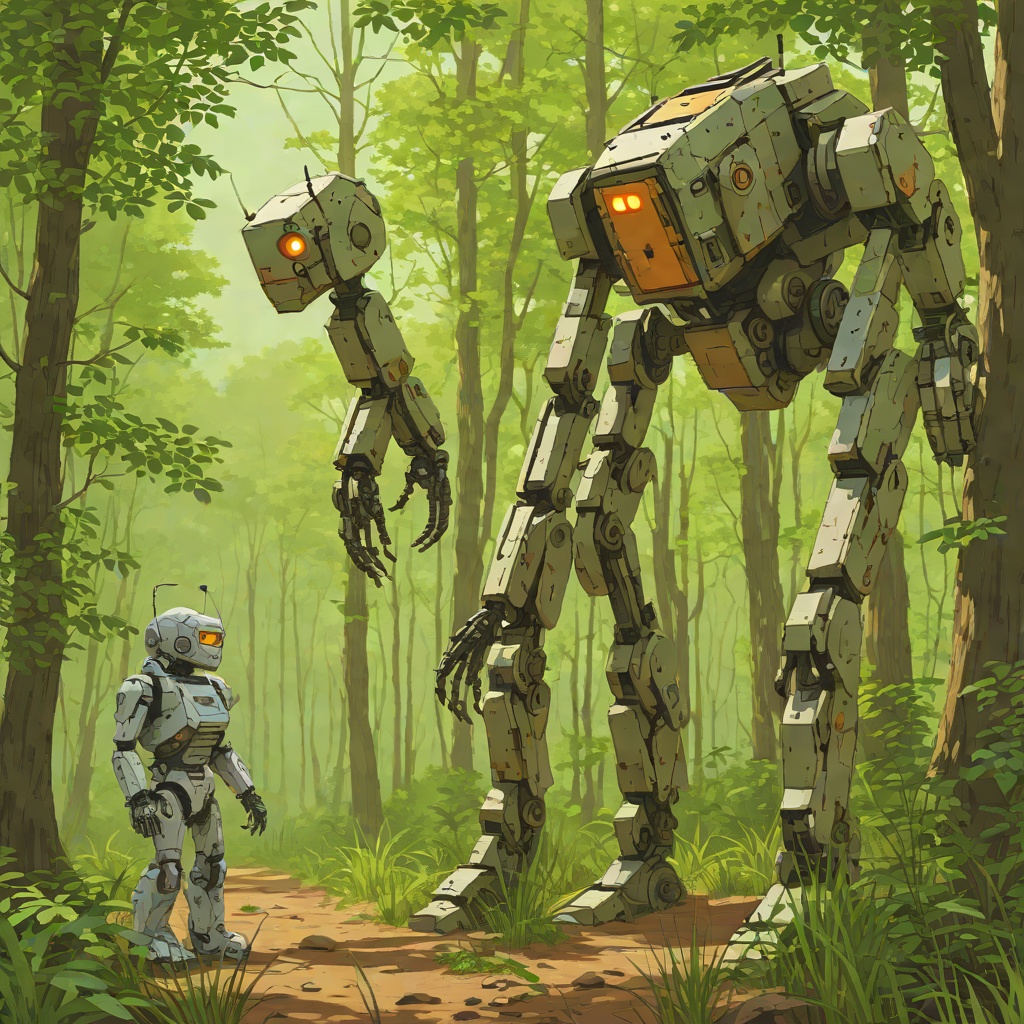
[Roz](entity:character-recall-character-roz-8ef263f5d049) takes her first steps and explores the robot graveyard, noticing the word 'ROZZUM' engraved on the torsos of the broken robots, including her own. She is nearly swept away by a giant wave, and her damage sensors activate for the first time. Her survival instincts urge her to move away from the ocean, and she sees the lush, green land above the shore as a safer place. She realizes she must climb the cliffs to get there.
Shortly after exploring the graveyard
Roz Climbs the Cliffs
[Roz](entity:character-recall-character-roz-8ef263f5d049) struggles to climb the cliffs, but after a brief encounter with a crab, she learns a new climbing technique by observing its wide stance and gripping legs. She spreads her arms wide, grips the cliff face, and slowly but methodically makes her way to the top, ignoring the seagulls that cry from their nests. She finally feels the soft ground of the island under her feet.
After climbing the cliffs
Roz Enters the Wilderness
The forest is full of animal sounds, but the animals hide as the sparkling monster passes. [Roz](entity:character-recall-character-roz-8ef263f5d049) finds the terrain difficult to navigate, tripping and stumbling. She is programmed to keep herself in good working order, so she immediately cleans herself until she shines again. She eventually finds a flat, open area carpeted with pine needles and stands there, still and safe.
Hours after entering the forest
The Pinecone Assault
While [Roz](entity:character-recall-character-roz-8ef263f5d049) stands still in the forest, a pinecone bounces off her head. A few hours later, another one falls. Then, a howling wind shakes the trees, and pinecones begin to rain down on her. Feeling something like annoyance, she scans the area for shelter and spots a huge rocky form towering over the forest: the mountain.
An hour after leaving the forest
Roz Reaches the Mountain Summit
[Roz](entity:character-recall-character-roz-8ef263f5d049) climbs the mountain, zigzagging through dense forest and rocky outcroppings until she reaches the steep summit. She is safe from the pinecones. She climbs onto a slanted stone slab, the highest point on the mountain, and turns her head completely around, seeing the ocean stretching to the horizon in every direction. At that moment, she realizes she is on an island.
At the mountain summit
Roz Surveys the Island
From the summit, [Roz](entity:character-recall-character-roz-8ef263f5d049) inspects the island. She sees the sandy southern tip, the green and hilly terrain, the rocky cone of the mountain, the cliffs, a waterfall feeding a river that winds through a large meadow, and the forest. She sees vultures, lizards, a badger, a moose, and sparrows. The island is full of life, and now there is a new kind of life: artificial life.
The first night of Roz's life
Roz's First Night
[Roz](entity:character-recall-character-roz-8ef263f5d049) watches the sun set and the stars come out. She turns on her headlights, but they are too bright, so she dims them and then turns them off. She sits in the darkness, listening to the night sounds. Her computer brain decides it is time to conserve energy, so she anchors her hands to the rocks, shuts down non-essential programs, and, in her own way, falls asleep.
Days after Roz reaches the summit
The Great Storm
A fierce storm, as ferocious as the one that sank the cargo ship, approaches the island. [Roz](entity:character-recall-character-roz-8ef263f5d049) tries to escape, but she is caught in a mudslide that carries her down the mountain. She is about to plunge over a cliff when she grabs onto the roots and trunk of a pine tree. She climbs into the branches, locks her arms and legs around the tree, and waits for the storm to pass.
The morning after the storm
The Aftermath of the Storm
[Roz](entity:character-recall-character-roz-8ef263f5d049) surveys the aftermath of the storm. The river has flooded, trees are uprooted, and debris is everywhere. The animals, however, seem to have survived well, having found shelter before the storm arrived. Roz is covered in mud and gravel, and her bumps and scratches are adding up. She feels relief when she spots a quiet hole in the mountainside, a cave that seems like a safe place for a robot.
Shortly after the storm
The Bear Attack
[Roz](entity:character-recall-character-roz-8ef263f5d049) enters a cave and accidentally wakes up a brother and sister bear from their morning nap. The bears, acting on instinct, chase the mysterious sparkling monster. They catch Roz and attack her, biting her arms, clawing her face, and hitting her chest. Roz's programming prevents her from being violent, and she can only plead, 'Please, stay away!'
During the bear attack
Roz Escapes the Bears
Using all the strength in her legs, [Roz](entity:character-recall-character-roz-8ef263f5d049) jumps high into the air and lands on a tree branch. The bears are annoyed when pinecones bounce off them, giving Roz an idea. Her programming prevents her from being violent, but nothing prevents her from being annoying. She throws pinecones at the bears with annoying precision until a distant roar calls them back to their mother.
After the bears leave
The Sticky Pine
[Roz](entity:character-recall-character-roz-8ef263f5d049) stays in the tree, cleaning herself, but gets covered in sticky pine resin. A robin, protective of its new nest, starts screaming and dive-bombing her, even splattering droppings on her face. Roz moves further along the branch, which breaks under her weight, and she crashes to the forest floor.
After Roz crashes to the ground
The Camouflaged Stick Insect
Lying under the tree, covered in branches, pinecones, needles, resin, and bird droppings, [Roz](entity:character-recall-character-roz-8ef263f5d049) notices a curious twig that is moving. She picks it up and realizes it is a stick insect, perfectly camouflaged. The insect teaches her a valuable lesson about survival: camouflage. Roz decides that she, too, will camouflage herself.
Shortly after meeting the stick insect
Roz Camouflages Herself
[Roz](entity:character-recall-character-roz-8ef263f5d049) decides to camouflage herself to survive. She covers her body with thick mud, then sticks ferns, grasses, flowers, leaves, and moss into the mud. She looks like a large clump of plants. She waits until night, then moves to the center of a clearing and blends into the landscape. For weeks, she observes the wilderness around her, completely invisible.
Weeks after camouflaging herself
Roz Learns the Animals' Language
Camouflaged, [Roz](entity:character-recall-character-roz-8ef263f5d049) secretly observes the animals' behavior. She studies the birds, learning their songs and what they mean. She discovers that all the different animals share a common language, just spoken in different ways. She begins to understand the deer, snakes, bees, and frogs. The animal noises are no longer meaningless sounds; they are animal words.
At a Dawn Truce gathering
Roz Introduces Herself
At a Dawn Truce gathering in the Great Meadow, [Swooper](entity:character-recall-character-swooper-a5c511a15bb5) the owl reports seeing a mysterious creature speaking in animal voices. The crowd is alarmed, but the clump of grass he points to turns out to be [Roz](entity:character-recall-character-roz-8ef263f5d049). She reveals herself and speaks to the animals in their own language, introducing herself. She asks them to teach her their survival techniques, but the animals are hostile and suspicious, calling her a monster. They all leave, refusing to help.
After the Dawn Truce gathering
The New Word Spreads
A new word spreads across the island: '[Roz](entity:character-recall-character-roz-8ef263f5d049)'. Everyone is talking about the robot, and they want nothing to do with her. She wanders the island, covered in dirt and green things, and everywhere she goes, she hears hostile words. These words would make most creatures sad, but robots don't feel emotions, and at that moment, it is probably for the best.
Shortly after the word about Roz spreads
Roz Helps the Injured Fox
[Roz](entity:character-recall-character-roz-8ef263f5d049) finds [Fink](entity:character-recall-character-fink-c20dbb0ba7e5) the fox lying on a log, howling in pain, his face full of porcupine quills. He reluctantly asks for her help. Roz carefully removes each quill, and Fink, though in agony, is grateful. He struggles to his feet, thanks her, and limps away, saying he owes her one.
In the spring
The Fatal Accident
While climbing down a cliff, [Roz](entity:character-recall-character-roz-8ef263f5d049) dislodges a block of stone, which breaks and falls. She crashes through the treetops but manages to grab a branch. The rocks, however, destroy a goose nest on the ground, killing two geese and breaking four eggs. Roz realizes she has caused the death of an entire goose family.
Immediately after the accident
Roz Finds the Egg
Standing in the rain, [Roz](entity:character-recall-character-roz-8ef263f5d049) hears a faint thumping sound and discovers a single perfect goose egg buried in the mud. A small voice from inside calls out, 'Mama! Mama!' Roz knows the gosling will die without a family. She decides she cannot let her accident cause another death. She carefully picks up the egg and walks away, determined to care for it.
The night after finding the egg
Roz Meets Pinktail the Opossum
While sitting in an oak tree with the egg, [Roz](entity:character-recall-character-roz-8ef263f5d049) witnesses an opossum feigning death to escape a badger. Intrigued, she speaks to the opossum, who introduces herself as [Pinktail](entity:character-recall-character-pinktail-5ccd721bf010). Pinktail explains that acting is a survival strategy. This gives Roz an idea: if she can act friendly, she can make friends. She practices her friendly voice and formally introduces herself to Pinktail.
Days after Roz finds the egg
Brightbill Hatches
The goose egg begins to hatch. A small beak pecks through the shell, and a gosling emerges into the world. The first thing it sees is [Roz](entity:character-recall-character-roz-8ef263f5d049) looking back at it. It calls her 'Mama!' and asks for food. Roz, using her most friendly voice, tries to explain she is not its mother, but the gosling is too young to understand.
Shortly after Brightbill hatches
Roz Seeks Help from the Old Goose
[Roz](entity:character-recall-character-roz-8ef263f5d049) carries the gosling around the island, asking animals for help. A frog, a squirrel, and a magpie point her toward the beaver pond, where an old gray goose named [Loudwing](entity:character-recall-character-loudwing-3186e54ef211) is floating. Loudwing is initially hostile, but she agrees to help, telling Roz she must act as the gosling's mother. She names the gosling [Brightbill](entity:character-recall-character-brightbill-6a9237402357) because of his bright beak and advises Roz to build a home on the ground, not in a tree.
Shortly after meeting Loudwing
The Beavers Build the Nest
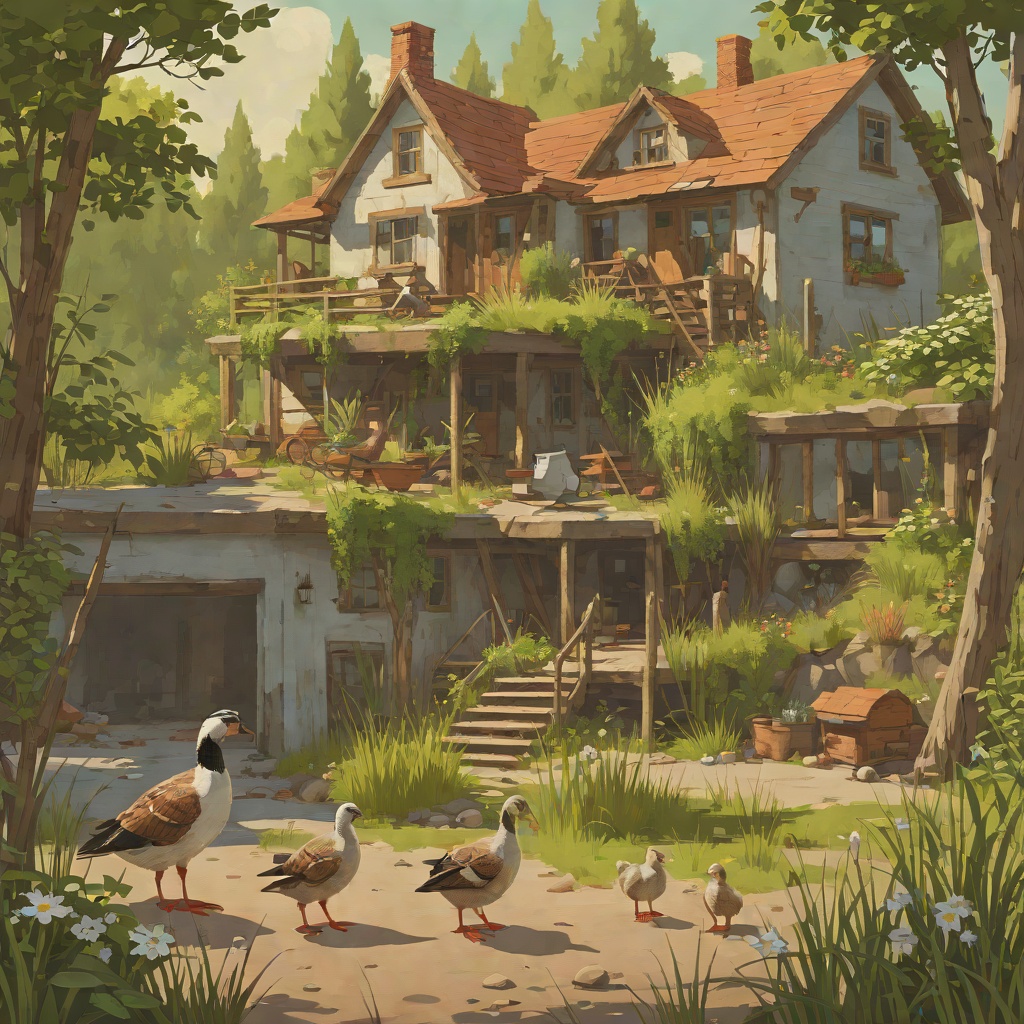
Following [Loudwing](entity:character-recall-character-loudwing-3186e54ef211)'s advice, [Roz](entity:character-recall-character-roz-8ef263f5d049) approaches the beavers with a gift of a freshly cut tree. After some negotiation, [Mr. Beaver](entity:character-recall-character-mr-beaver-763fa9e79f76) agrees to help build a lodge for [Roz and Brightbill](entity:relation-recall-relation-roz-and-brightbill-ab0c81f44c2b) in exchange for more trees. Roz does the heavy work, and Mr. Beaver designs and directs the construction. They build a large, round lodge with a fireplace, which they name 'The Nest'.
The night the Nest is completed
The First Night in the Nest
[Roz and Brightbill](entity:relation-recall-relation-roz-and-brightbill-ab0c81f44c2b) settle into their new home for their first night. [Brightbill](entity:character-recall-character-brightbill-6a9237402357) explores every corner of the lodge but refuses to sleep in his nest or on the moss cushion. He finally asks his mother to sit and hold him. [Roz](entity:character-recall-character-roz-8ef263f5d049) holds him, and the gosling feels loved and safe, sleeping peacefully in her arms all night.
Shortly after the Nest is built
Tawny Helps Create the Garden
Following [Mr. Beaver](entity:character-recall-character-mr-beaver-763fa9e79f76)'s advice, [Roz](entity:character-recall-character-roz-8ef263f5d049) seeks out [Tawny](entity:character-recall-character-tawny-3a431e924bd3) the deer to help create a garden. Tawny agrees to help if her family can eat from it. She instructs Roz to clear the land and asks the moles and groundhogs to loosen the soil. She then asks all the neighbors to leave their droppings around the Nest to fertilize the ground, which brings the whole community together.
Spring and summer
Roz Becomes a Mother
[Brightbill](entity:character-recall-character-brightbill-6a9237402357) follows his mother everywhere. The garden flourishes, and the deer, beavers, groundhog, moose, bees, and butterflies all visit. The animals who once fled from [Roz](entity:character-recall-character-roz-8ef263f5d049) now stop by the Nest just to spend time with her. At the Dawn Truce, other mothers share parenting advice with her. Roz becomes an excellent mother, always ready to answer Brightbill's questions, play with him, or rock him to sleep.
Summer
Brightbill's First Swim
[Loudwing](entity:character-recall-character-loudwing-3186e54ef211) announces that it is swimming day, when all the goslings are taken to the pond for the first time. [Roz](entity:character-recall-character-roz-8ef263f5d049) cannot swim, so she stays in the shallows while [Brightbill](entity:character-recall-character-brightbill-6a9237402357) joins the other goslings. He is a natural swimmer. However, the giant pike, [Rockmouth](entity:character-recall-character-rockmouth-39fcae3e389f), attacks the goslings. Loudwing rescues Brightbill, and he is safe in his mother's arms.
Summer
Brightbill Meets Chitchat
A small squirrel named [Chitchat](entity:character-recall-character-chitchat-00866e763e90) runs into the garden and introduces herself to [Brightbill](entity:character-recall-character-brightbill-6a9237402357). She talks endlessly, but Brightbill is patient and kind. He tells her he likes her and that they should be friends. Chitchat is speechless with joy.
Summer
Brightbill's First Flight
[Brightbill](entity:character-recall-character-brightbill-6a9237402357) becomes curious about the world beyond the pond. [Roz](entity:character-recall-character-roz-8ef263f5d049) takes him to the western ridge, where he sees the ocean for the first time. With his mother's coaching, he learns to adjust his wings to the wind and takes his first real flight. He is overjoyed, and Roz is proud. He wishes his mother could fly with him.
Summer
The Ship on the Horizon
While practicing flight on the ridge, [Roz and Brightbill](entity:relation-recall-relation-roz-and-brightbill-ab0c81f44c2b) spot a mysterious object far out at sea. [Roz](entity:character-recall-character-roz-8ef263f5d049) identifies it as a ship, a large vessel used for maritime transport. They watch it crawl across the ocean until it disappears toward the south. They have many questions but no answers.
Summer
The Strange Family
[Brightbill](entity:character-recall-character-brightbill-6a9237402357) comes home upset after other goslings tease him for having a monster for a mother. He asks [Roz](entity:character-recall-character-roz-8ef263f5d049) what a robot is. She explains she is a machine, built, not born. She tells him about her first memory of waking up on the island. Brightbill asks if she is his real mother, and she explains she is not his biological mother but will always act as his mother. They agree they are a strange family, but they like it that way.
Summer
Brightbill Runs Away
[Brightbill](entity:character-recall-character-brightbill-6a9237402357), struggling with his feelings about [Roz](entity:character-recall-character-roz-8ef263f5d049), demands to see the dead robots on the north shore. Roz refuses, saying he is too young. Frustrated, Brightbill shouts that she can't stop him because she can't fly, and he sprints to the pond, takes off, and flies away.
Shortly after Brightbill runs away
Roz Finds Brightbill at the Graveyard
Worried, [Roz](entity:character-recall-character-roz-8ef263f5d049) runs to the robot graveyard, where she finds [Brightbill](entity:character-recall-character-brightbill-6a9237402357) perched on the edge, looking at the scattered robot parts. He is crying. He apologizes for flying away and says he needs to understand what she is. They go down to the graveyard together.
At the robot graveyard
The Dead Robots and the Button
[Roz and Brightbill](entity:relation-recall-relation-roz-and-brightbill-ab0c81f44c2b) examine the dead robots. [Brightbill](entity:character-recall-character-brightbill-6a9237402357) asks if [Roz](entity:character-recall-character-roz-8ef263f5d049) will die someday, and she says she thinks so. He finds a button on the back of a dead robot's head. Roz explains what it is, and Brightbill discovers she has one too. He wants to press it, but he is afraid. Roz says she thinks she will stop, but he can press it again to restart her. Brightbill is too scared and refuses.
At the robot graveyard
The Otters Say Hello
[Brightbill](entity:character-recall-character-brightbill-6a9237402357) sees sea otters playing in the ocean and introduces himself and his mother. The otters, including [Shelly](entity:character-recall-character-shelly-6af3fa3a7906), are friendly. Shelly tells the story of how they first met [Roz](entity:character-recall-character-roz-8ef263f5d049), when she was packed in a box. The story upsets Brightbill, who learns his mother was once a 'shiny monster' in a crate. Roz decides it is time to leave.
At the top of the cliffs
The Bears Ambush Roz
As [Roz](entity:character-recall-character-roz-8ef263f5d049) climbs back up the cliff, she is met by [Nettle and Thorn](entity:relation-recall-relation-nettle-and-thorn-afeea9d8c34b), the two young bears who attacked her before. They are hostile and want to make her uncomfortable. [Brightbill](entity:character-recall-character-brightbill-6a9237402357) tries to defend her, but [Nettle](entity:character-recall-character-nettle-79f001c4bdac) swats him away. The bears attack Roz, and during the struggle, [Thorn](entity:character-recall-character-thorn-ed996e69a0ae) twists off her right foot. Thorn falls off the cliff, but Roz, with the help of [Mother Bear](entity:character-recall-character-mother-bear-4ce006f3e205) and Nettle, saves him.
After the fight on the cliff
The Parade to the Nest
[Roz](entity:character-recall-character-roz-8ef263f5d049) is left with one foot and cannot walk well. [Mother Bear](entity:character-recall-character-mother-bear-4ce006f3e205) offers to carry her home. [Brightbill](entity:character-recall-character-brightbill-6a9237402357) rides on the bear's shoulders. As they travel through the forest, other animals join them, forming a grand parade. They finally reach the Nest, and the bears say goodbye. Brightbill asks if Roz will ever walk again, and she says she knows who to ask for help.
Shortly after the parade
The Wooden Foot
[Mr. Beaver](entity:character-recall-character-mr-beaver-763fa9e79f76), with the help of the [Fuzzy Bandits](entity:character-recall-character-fuzzy-bandits-a6f290b4a06a) (raccoons) and [Trunktap](entity:character-recall-character-trunktap-cfaa91671405) the woodpecker, builds a new wooden foot for [Roz](entity:character-recall-character-roz-8ef263f5d049). They use hard wood, strong vines, and tree resin to create a durable replacement. After some trial and error, they succeed. Roz walks again, albeit with a slight limp.
Summer and early autumn
Brightbill Becomes an Expert Flyer
With his mother's coaching, [Brightbill](entity:character-recall-character-brightbill-6a9237402357) studies the flight techniques of other birds and becomes an exceptionally skilled flyer. He can dive, swoop, soar, and glide around the island. The adult geese frown at his aerial tricks, but the goslings find him incredible. He leads a group of goslings on flights every morning.
Summer
The Button Experiment
[Brightbill](entity:character-recall-character-brightbill-6a9237402357) and [Roz](entity:character-recall-character-roz-8ef263f5d049) decide to discover what happens when her button is pressed. Brightbill presses it, and Roz shuts down. Her eyes go black, and she is unresponsive. Brightbill is terrified, but he presses the button again. Roz restarts, speaking her automated introduction before her familiar voice returns. She says it felt like only an instant.
Autumn
Autumn Arrives
The days grow shorter, the air grows cooler, and frost covers the garden. The leaves change color and fall. Animals grow thicker fur or feathers, and some begin to hibernate. The migratory birds, including the geese, prepare for their long journey south.
Late autumn
The Flock Prepares to Migrate
[Brightbill](entity:character-recall-character-brightbill-6a9237402357) learns from the other goslings that the geese must leave the island for the winter. He asks [Roz](entity:character-recall-character-roz-8ef263f5d049) if she will migrate with them, but she cannot fly or swim. He wants to stay with her, but she insists he should go with the flock. They ask the other geese about the journey, and Brightbill feels a strong instinct to fly south.
The night before and morning of the migration
The Migration Begins
The night before the migration, [Brightbill](entity:character-recall-character-brightbill-6a9237402357) sleeps fitfully and ends up in his mother's arms. In the morning, [Chitchat](entity:character-recall-character-chitchat-00866e763e90) says goodbye and promises to take care of [Roz](entity:character-recall-character-roz-8ef263f5d049). [Longneck](entity:character-recall-character-longneck-c0f09c7822a0), the biggest goose, will lead the migration, and Brightbill will fly beside him. Roz tells Brightbill she is proud of him. They say goodbye, and the flock takes off, forming a V shape and heading south. Roz watches until they disappear.
Winter
Roz Hibernates
The island is quiet. [Roz](entity:character-recall-character-roz-8ef263f5d049), alone, doesn't know what to do with herself. She stands in her gray garden until snow begins to fall. She retreats into the Nest, slides the stone door shut, and sits in the darkness. Hours, days, and weeks pass without her moving. In her own way, the robot hibernates.
Late winter
Roz Wakes to a Collapsed Nest
A ray of sunlight falls on [Roz](entity:character-recall-character-roz-8ef263f5d049)'s face, re-energizing her battery. She wakes to find the roof of the Nest has collapsed under the weight of snow. She is cold, stiff, and slow. She lights a fire, and as she thaws, she goes outside into a strange, bright, snowy landscape. She begins gathering wood and finds the frozen bodies of animals who did not survive the brutal winter.
During the harsh winter
Roz Invites the Animals to the Nest
[Roz](entity:character-recall-character-roz-8ef263f5d049) repairs the Nest and decides to keep a fire burning day and night to prevent the snow from collapsing the roof again. She calls out to the animals of the island, inviting them to join her in her lodge, where it is warm and safe.
The night of Roz's invitation
The Lodgers Arrive
One by one, animals arrive at the Nest seeking warmth: [Chitchat](entity:character-recall-character-chitchat-00866e763e90) the squirrel, a family of hares, [Pinktail](entity:character-recall-character-pinktail-5ccd721bf010) the opossum, [Swooper](entity:character-recall-character-swooper-a5c511a15bb5) the owl, chickadees, a magpie, [Fink](entity:character-recall-character-fink-c20dbb0ba7e5) the fox, [Digdown](entity:character-recall-character-digdown-fdb0b11c7209) the groundhog, the [Fuzzy Bandits](entity:character-recall-character-fuzzy-bandits-a6f290b4a06a) carrying an old tortoise named [Crag](entity:character-recall-character-crag-1cb5bb5c56bc). [Roz](entity:character-recall-character-roz-8ef263f5d049) proposes a truce, and the animals agree not to hunt each other inside her lodge. They all sleep peacefully by the fire.
During the harsh winter
Roz Builds More Lodges
The Nest is full, and [Roz](entity:character-recall-character-roz-8ef263f5d049) knows more animals need help. She builds a second lodge across the pond for [Broadfoot](entity:character-recall-character-broadfoot-63c120900865) the moose and other animals. She then builds a third, fourth, and fifth lodge across the island. Each lodge glows warmly through the long winter nights, and inside, animals laugh, share stories, and cheer for their good friend Roz.
During the harsh winter
The Lodge Fire
A fire breaks out in the second lodge. [Roz](entity:character-recall-character-roz-8ef263f5d049) charges across the ice and finds the lodge engulfed in flames. A mother hare's baby is still inside. Roz rushes in, protects the leveret with her body, and breaks through the wall to safety. She then climbs a pine tree and shakes snow onto the flames, extinguishing the fire. The animals rebuild the lodge with more rocks and less wood, and a new respect for fire.
During the harsh winter
Conversations by the Fire
The animals in the Nest have conversations to keep things pleasant. [Chitchat](entity:character-recall-character-chitchat-00866e763e90) wonders about [Brightbill](entity:character-recall-character-brightbill-6a9237402357). [Digdown](entity:character-recall-character-digdown-fdb0b11c7209) the groundhog gives a speech about helping others. [Crag](entity:character-recall-character-crag-1cb5bb5c56bc) the tortoise tells stories of the island's past, when it was a mountain surrounded by plains. [Swooper](entity:character-recall-character-swooper-a5c511a15bb5) the owl says everything has a purpose, and the animals suggest [Roz](entity:character-recall-character-roz-8ef263f5d049)'s purpose is to build, garden, and care for Brightbill. Roz wonders if she is simply meant to help others.
Spring
Spring Returns
The snow and ice melt, revealing the gray and brown earth. New green buds appear, and colorful flowers bloom. The lodgers go home, and the hibernators emerge. [Roz](entity:character-recall-character-roz-8ef263f5d049) checks on her friends. It is a quiet spring, as many creatures died during the winter, but their bodies nourish the soil, creating the most dazzling spring bloom the island has ever seen.
Spring
Roz Helps Rockmouth
[Paddler](entity:character-recall-character-paddler-ccb7ff1906c3) the beaver is attacked by [Rockmouth](entity:character-recall-character-rockmouth-39fcae3e389f) the pike. [Roz](entity:character-recall-character-roz-8ef263f5d049) rescues him and learns that Rockmouth was trapped in the pond when the beavers built their dam. She decides to return him to the river. The beavers, after some reluctance, help build a barrel for the fish. Roz carries Rockmouth across the island and releases him into the river, where he smiles and swims away.
Spring
The Robot Stories Spread
Stories about [Roz](entity:character-recall-character-roz-8ef263f5d049) spread across the island. There are stories of her growing gardens, healing sick animals, and creating tools. Most of the new stories are about her wildness. Roz notices that the more she acts wild, the more the animals like her. She barks with foxes, sings with birds, and hisses with snakes.
Spring
Brightbill Returns
A flock of geese appears over the trees, flying in perfect V formation, led by a small, graceful goose. The flock lands on the pond, and the leader swims to the Nest, waddles into the garden, and flutters onto his mother's shoulder. It is [Brightbill](entity:character-recall-character-brightbill-6a9237402357). He says, 'It's good to be back, Mama.'
The day Brightbill returns
Brightbill's Winter Story
[Brightbill](entity:character-recall-character-brightbill-6a9237402357) tells [Roz](entity:character-recall-character-roz-8ef263f5d049) the story of his winter migration. The flock faced early snow, lost the old goose Widefoot, and got lost. They found a farm with a greenhouse, where a robot let them in. An old cat named [Snooks](entity:character-recall-character-snooks-1bc11e58c8d4) helped them hide. But a human discovered them and shot [Longneck](entity:character-recall-character-longneck-c0f09c7822a0) dead with a rifle. Brightbill led the flock south, following the coast, seeing cities, robots, and humans. A pigeon named [Graybeak](entity:character-recall-character-graybeak-e167ccf3a253) showed them around a city, where they saw a factory building robots. They finally reached the wintering grounds, where they met other flocks. In the spring, they flew home.
After Brightbill tells his story
The Special Robot
[Roz](entity:character-recall-character-roz-8ef263f5d049) tells [Brightbill](entity:character-recall-character-brightbill-6a9237402357) about her own winter, about hibernating, the collapsed Nest, the frozen animals, the lodges she built, and the fire. She says she made new friends all by herself and thinks the other animals might like her. Brightbill exclaims that she is the friendliest robot he has ever seen, and he realizes how special she truly is.
At a Dawn Truce gathering
Roz Invites Everyone to a Party
At the next Dawn Truce, [Roz](entity:character-recall-character-roz-8ef263f5d049) announces she has planned a party to celebrate surviving the winter and [Brightbill](entity:character-recall-character-brightbill-6a9237402357)'s return. She asks for another truce that evening, the '[Party Truce](entity:rule-recall-rule-party-truce-dfe216d6e84a)'. She promises it will not be dark even though there is no moon. She says she will take care of everything.
The evening of the party
The Bonfire Party
At dusk, the animals gather in the Great Meadow. [Roz](entity:character-recall-character-roz-8ef263f5d049) has built a giant tower of wood. She emerges from the forest camouflaged in mud and wildflowers, carrying a flaming stick as a torch. She thanks the animals for teaching her to live and be wild. She throws the torch onto the woodpile, and a huge bonfire erupts. The animals dance, sing, and celebrate all night. A cargo ship passing by sees the bonfire and the robot.
The morning after the party
The Sunrise Walk
At dawn, the bonfire is reduced to smoking ashes. [Roz and Brightbill](entity:relation-recall-relation-roz-and-brightbill-ab0c81f44c2b) walk to their favorite spot on the grassy ridge and then climb to the mountain summit to watch the sunrise. [Roz](entity:character-recall-character-roz-8ef263f5d049) says she once thought she would always be alone, but she was wrong. [Brightbill](entity:character-recall-character-brightbill-6a9237402357) asks if she is happy, and she says she is. Then he spots an airship flying toward them.
The morning after the party
The RECOs Arrive
A sleek white airship approaches the island. Inside are three identical robots, larger and shinier than [Roz](entity:character-recall-character-roz-8ef263f5d049), with '[RECO](entity:character-recall-character-reco-2e7ff8205e68)' engraved on their torsos. They circle the island, observing the ashes, the wooden domes, and the dead robots on the shore. They land in a small meadow at the foot of the mountain. The RECOs exit the ship and face a dark figure emerging from the forest: Roz.
At the meadow
The RECOs Demand Roz's Return
[RECO](entity:character-recall-character-reco-2e7ff8205e68) 1 tells [Roz](entity:character-recall-character-roz-8ef263f5d049) they are there to recover all ROZZUM units. They have located the four dead ones and now want her. Roz asks questions, but they refuse to answer. RECO 1 explains she is the property of [TechLab Industries](entity:organization-recall-organization-techlab-industri-b711c1ac074b) and will be returned to the factory, refurbished, and sold. When Roz says she lives here, RECO 1 declares her defective and orders her deactivation.
At the meadow
The Animals Defend Roz
As the RECOs move to deactivate [Roz](entity:character-recall-character-roz-8ef263f5d049), [Brightbill](entity:character-recall-character-brightbill-6a9237402357) dives in to defend her. The animals of the forest gather, and the flock of geese attacks the RECOs, distracting them. Brightbill searches for buttons on the RECOs but finds none. The RECOs retreat to their airship and return with silver rifles. The hunt for Roz begins.
During the hunt
The Forest Assault on RECO 3
[RECO](entity:character-recall-character-reco-2e7ff8205e68) 3 marches into the forest, where the animals launch a coordinated attack. Birds bomb it with droppings, blinding it. [Chitchat](entity:character-recall-character-chitchat-00866e763e90) scratches its eyes. The [Fuzzy Bandits](entity:character-recall-character-fuzzy-bandits-a6f290b4a06a) steal its rifle, and the deer carry it away. [Broadfoot](entity:character-recall-character-broadfoot-63c120900865) the moose kicks the robot's head until it is destroyed. RECO 3 is defeated.
During the hunt
The Mountain Rumble with RECO 2
[RECO](entity:character-recall-character-reco-2e7ff8205e68) 2 searches a cave, where [Mother Bear](entity:character-recall-character-mother-bear-4ce006f3e205) and her cubs ambush it. The robot fires its rifle, causing an avalanche. Mother Bear is injured, but the cubs escape. RECO 2, damaged and one-armed, continues the hunt. The cubs follow it to the river, where they push it into the water. [Nettle](entity:character-recall-character-nettle-79f001c4bdac) is swept toward the waterfall, but hundreds of fish save her. RECO 2 goes over the falls and is destroyed.
During the hunt
The Chase for Roz
[RECO](entity:character-recall-character-reco-2e7ff8205e68) 1, now alone, tracks [Roz](entity:character-recall-character-roz-8ef263f5d049) across the island. The animals set traps for it, but it continues. Roz runs for hours, but her wooden foot finally breaks. RECO 1 follows her to the cliffs and descends to the robot graveyard, where it detects her signal.
At the robot graveyard
The Click
[Roz](entity:character-recall-character-roz-8ef263f5d049), camouflaged in seaweed, grabs [RECO](entity:character-recall-character-reco-2e7ff8205e68) 1's rifle. They struggle, and the rifle explodes, destroying itself and severely damaging both robots. Roz loses her arms and legs, and RECO 1 is wounded but still functional. It approaches Roz, and she pleads, 'Please, don't deactivate me.' RECO 1 ignores her and presses the button on the back of her head. Click.
After Roz is deactivated
The Last Rifle
[RECO](entity:character-recall-character-reco-2e7ff8205e68) 1 begins collecting the robot parts scattered around the graveyard, piling them around [Roz](entity:character-recall-character-roz-8ef263f5d049)'s lifeless body. [Brightbill](entity:character-recall-character-brightbill-6a9237402357), determined to save his mother, sneaks into the pile and presses her button. She restarts. RECO 1 grabs Brightbill, but the geese and otters use the last rifle to shoot the robot. RECO 1 falls, but before dying, it warns Roz that more RECOs will come, and the Makers will not stop until all missing robots are recovered.
After the battle
The Broken Robot
The animals try to reattach [Roz](entity:character-recall-character-roz-8ef263f5d049)'s arms and legs, but her body is too damaged. Roz tells them she is lucky to still be able to think and speak. She knows she needs help she cannot get on the island. She asks for help to get home.
The night after the battle
The Meeting of Friends
[Roz](entity:character-recall-character-roz-8ef263f5d049)'s closest friends gather in the Nest to discuss what to do. They talk all night, and by dawn, they agree on a plan. The next morning, the Dawn Truce is held in the meadow before the airship. Roz tells the animals she must leave. She says the RECOs will keep coming, and she cannot risk more lives. She must return to her Makers to get the repairs she needs.
The morning after the meeting
The Farewell
The animals load all the robot parts and rifles into the airship. [Roz](entity:character-recall-character-roz-8ef263f5d049) is carried through the door. She says goodbye to the animals, and they all roar, scream, howl, chirp, and growl their farewells. [Brightbill](entity:character-recall-character-brightbill-6a9237402357) flutters to her shoulder. They say they love each other. The door closes with a buzz.
Immediately after the farewell
The Departure
The airship's engines start automatically. The ship floats slowly over the island, turns toward the south, and disappears into the clouds.
As the airship flies away
The Sky and the Plan
[Roz](entity:character-recall-character-roz-8ef263f5d049) sits in the airship, broken and alone, rushing toward a mysterious future. She reflects on her miraculous past and feels lucky to have lived such an incredible life. She thinks of [Brightbill](entity:character-recall-character-brightbill-6a9237402357), her son, and her family and friends on the island. She begins to formulate a plan: she will get the repairs she needs, escape her new life, and find her way back home.